
Cancer immunotherapy has transformed oncology by shifting the focus from targeting tumors directly to harnessing the power of the immune system. Instead of attacking cancer cells with radiation or chemotherapy, cancer immunotherapies aim to enhance the body’s natural defenses, enabling it to detect and destroy malignant cells more effectively.
There are several types of cancer immunotherapy, including checkpoint inhibitors, adoptive cell therapies, monoclonal antibodies, cancer vaccines, and cytokine therapies.
Among these, CAR T-cell therapy stands out for its personalized and genetically engineered approach. Unlike other immunotherapies that enhance or supplement immune activity, CAR T-cell therapy reprograms a patient’s own immune cells to become a highly specific, cancer-fighting force.
What Is CAR T-Cell Therapy?
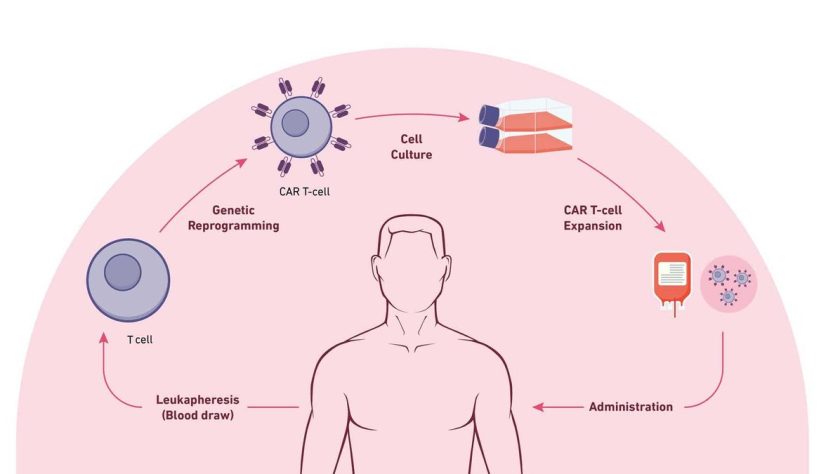
CAR T-cell therapy (chimeric antigen receptor T-cell therapy) is a type of adoptive cell therapy. In this process, T cells are extracted from a patient’s blood and genetically modified in a lab to express special receptors (CARs) on their surface. These receptors are engineered to recognize specific proteins found in cancer cells.
Once modified, the T cells are expanded and infused back into the patient. The CARs help these cells home in on cancer cells and destroy them with precision. This approach essentially equips the immune system with a built-in GPS to target specific malignancies.
CAR T-Cell Therapy vs. Other Immunotherapies
A key difference between CAR T-cell therapy and other forms of immunotherapy lies in how the immune system is engaged.
- Checkpoint inhibitors work by lifting the “brakes” that tumors place on immune cells. By blocking proteins like PD-1 or CTLA-4, these therapies unleash existing T cells to fight cancer. However, their effectiveness depends on the presence of pre-existing T-cell activity within the tumor microenvironment.
- In contrast, CAR T-cell therapy bypasses the need for natural immune recognition. It genetically reprograms T cells to recognize cancer-specific antigens even if the original immune response was weak or absent.
Another major distinction is in how these therapies are developed and administered:
- Checkpoint inhibitors and monoclonal antibodies are off-the-shelf drugs that can be administered through infusions without cell harvesting.
- CAR T therapy is a multi-step, patient-specific process that involves cell collection, engineering, expansion, and reinfusion, often requiring a highly specialized treatment center.
CAR T-cell therapy is currently approved primarily for hematologic malignancies such as:
- B-cell acute lymphoblastic leukemia (ALL)
- Diffuse large B-cell lymphoma (DLBCL)
- Mantle cell lymphoma
- Multiple myeloma
While CAR T-cell therapy has shown encouraging results in treating blood cancers, research focused on improving safety and expanding its application is ongoing.
Success Rates and Long-Term Outcomes
CAR T-cell therapy has demonstrated high and durable response rates, even in patients with advanced, treatment-resistant cancers. It has been effective where standard therapies have failed, including in refractory and relapsed cases. Overall response rates typically range from 70% to 90%, with complete responses observed in approximately 50% to 70% of patients. While outcomes can vary depending on the type of CAR T-cell therapy and individual patient factors, many experience prolonged progression-free survival, with around half remaining relapse-free over the long term.
Final Thoughts
As research advances, the landscape of cancer immunotherapy continues to evolve. While therapies like checkpoint inhibitors offer broad applicability, CAR T-cell therapy represents a highly personalized and potent strategy, especially in certain treatment-resistant blood cancers. Understanding these distinctions helps determine immunotherapy options and the optimal approach based on cancer specifics and patient response.