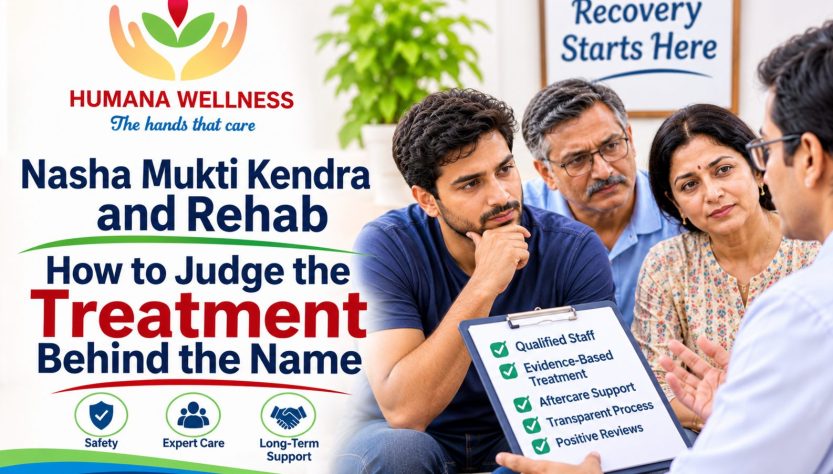
People use several terms when they look for help with alcohol or drug dependence. Some search for rehabilitation, others for de-addiction, and many families use the familiar expression nasha mukti kendra. The name can be useful when searching locally, but it does not describe the medical care, counselling or safeguards that a particular service actually provides.
A family should not have to understand specialist terminology before asking for help. It does, however, help to know which questions separate a structured treatment programme from a place that simply promises to keep someone away from substances.
What are families really looking for?
When someone compares rehabs in delhi, the underlying concern may be alcohol dependence, opioid use, misuse of prescribed sedatives, cannabis use or a mixture of substances. Some people also experience depression, anxiety, chronic pain, trauma or serious difficulties at home. The word ‘rehab’ is too broad to describe all these needs.
An assessment should establish which substances are involved, how they are used, whether withdrawal is likely and what help the person needs with mental and physical health. The plan may involve medical treatment, psychological therapies, family support and later follow-up. The order and intensity depend on the person.
It is worth asking whether the centre can explain the difference between reducing immediate physical risk and helping someone change their patterns of use. Withdrawal management can make a person medically safer during a difficult period. It does not automatically address the reasons for continued use, practical problems or the habits that may lead to recurrence.
A familiar name does not guarantee a particular service
In everyday conversation, nasha mukti kendra may be used for many different settings. Some families use that phrase to ask where a service is located. The service publishes its centre address as 1595, Huda Colony, Sector 46, Gurugram, Haryana 122003. That is within Delhi NCR, but it is in Gurugram, not Delhi city. Always confirm the exact location and the services available there before travelling.
Ask who completes medical assessments and who can prescribe medicines. Ask about overnight supervision, transfer arrangements if withdrawal becomes severe, and the qualifications of people conducting therapy. A programme that provides counselling may be helpful for some people but cannot be assumed to offer hospital-level medical treatment.
A centre should welcome straightforward questions. ‘What would happen if my relative had a seizure?’ is more important than ‘How many years have you been open?’ ‘Who checks treatment progress?’ is more useful than ‘Do you have a fixed thirty-day package?’
What evidence-informed care looks like
Treatment can include talking therapies that help people identify triggers, deal with cravings, make decisions and practise alternative responses to stress. Support may also involve work with family relationships or social problems. For some substance use disorders, medicines prescribed and monitored by qualified clinicians are an important part of care. The correct approach varies by substance and individual condition.
The World Health Organization’s guidance recognises structured psychosocial interventions as part of alcohol dependence treatment. International standards developed with the United Nations Office on Drugs and Crime also emphasise ethical, respectful care and informed consent. These principles are relevant in India even though each facility must separately meet the laws and professional requirements that apply locally.
No credible programme should guarantee permanent recovery after a set number of days. Progress may be uneven. A person can improve physically before they feel confident managing work stress or family conflict. Follow-up care should be discussed early, not introduced as an optional extra on discharge day.
Discipline should never mean humiliation
Families sometimes ask whether a strict residential environment will help a reluctant person. Clear routines can make daily life more predictable. Rules about sleep, attendance, visitors and safety may be appropriate when explained and applied fairly.
Punishment, intimidation or degrading treatment are different matters. Ask how the centre manages conflict, complaints and distress. Find out what residents may do if they feel unsafe or believe they are being treated unfairly. Ask about confidentiality, consent to treatment and access to outside medical care. A secure setting should still recognise the rights and dignity of the people staying there.
The person receiving care should be told what will happen during assessment, what choices are available and what information can be shared with relatives. If somebody is too unwell to participate meaningfully, the team should explain the appropriate medical and legal safeguards rather than bypass the issue.
Questions about family and cultural fit
Different households use different words for substance problems. Some speak openly; others fear social judgement. A patient may be more comfortable discussing sensitive matters in a language they know well, or with someone who understands their family circumstances. Ask whether appropriate language support is available. Do not assume it from a centre’s name or location.
Family involvement should also be planned with care. A meeting may help relatives understand dependence, agree on practical boundaries and learn how to respond to setbacks. It should not become a session where several family members shame the person receiving treatment. In some circumstances, a relative may need separate support as well.
It is reasonable to ask about food, religious practices, personal privacy, phone access and the ability to maintain appropriate contact with home. These concerns are not distractions from treatment. They can affect whether a person feels safe enough to participate.
Looking beyond admission
Before choosing a service, ask how discharge is decided and who helps arrange continued care. Is there a follow-up appointment? What happens if someone struggles with cravings after returning home? Will they receive written instructions about medicines and urgent warning signs when relevant?
The most useful rehabilitation programme is one whose methods can be explained in ordinary language and adapted to actual needs. Whether a family calls it rehab, de-addiction or a nasha mukti kendra, the standards should remain the same: competent assessment, appropriate treatment, respectful care, safety and a realistic plan for life afterwards.